




Karl-Michael Zettl Head of Marketing & Solutions, RHI Magnesita
Without refractory products, industry simply doesn’t work. They enable high-temperature processes — whether in steel or cement production. But they wear out and need regular replacement. The big question is: do I dispose of them, or do I return them as raw materials? The latter reduces dependence on raw material imports and significantly lowers CO2 emissions.
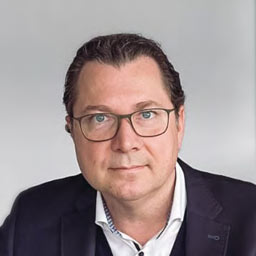
Nenad Tanasic CEO, MIRECO
Moreover, magnesia and other primary raw materials used in refractory products are highly CO2-intensive. By replacing them with recycled materials, we can reduce the carbon footprint by up to 90 percent. That’s measurable — and directly relevant for our customers.
You refer to a “CO2-optimized refractory concept.” What does that mean in practice?
Karl-Michael Zettl RHI Magnesita
We calculate the product carbon footprint of each furnace lining and develop alternative solutions with a higher recycling content. The key is that the products have the same quality and performance as primary materials — but significantly lower CO2 emissions. This allows companies to meet ESG targets faster and more cost-effectively in the long term.
How does the recycling process work in practice?
Nenad Tanasic MIRECO
We manage the entire cycle: dismantling, sorting, processing, and reintegration. This is not a waste business, but targeted raw material recovery. In 2025, we will process about 250,000 tons that won’t end up in landfills — equivalent to nearly 500,000 tons of CO2 saved.
Karl-Michael Zettl RHI Magnesita
And by doing so, we also reduce import dependencies. Given current geopolitical tensions, that’s an economic argument, not just an ecological one.
You call this model “CERO-Waste.” How does it differ from traditional recycling?
Nenad Tanasic MIRECO
Recycling works best when all participants pull together — manufacturers, users, and recyclers. That’s why we see CERO-Waste as a partnership model in which sustainable, creative, effective, and economically sound solutions are developed collaboratively.
Karl-Michael Zettl RHI Magnesita
We’re not talking about isolated projects here, but about a raw materials strategy. Those who integrate circular material flows early on gain supply security and competitive advantages.
What benefits do customers experience?
Nenad Tanasic MIRECO
First: professional and legally compliant disposal.
Second: transparent and value-based reuse.
Third: reduced dependency through locally generated sustainable raw materials.
Karl-Michael Zettl RHI Magnesita
And there’s also the external perception: investors and customers reward companies that systematically implement circular economy models. This is increasingly reflected in sustainability ratings.
How has the industry responded so far?
Karl-Michael Zettl RHI Magnesita
Demand is noticeably increasing. Many companies have realized that circularity helps them achieve three goals at once: reduce CO2, stabilize costs, and secure supply.
Nenad Tanasic MIRECO
The pressure is growing: “sustainability” alone is no longer enough — what’s needed are robust strategies for raw material cycles. Those who fail to act risk regulatory disadvantages and loss of competitiveness.
What specific contribution do refractory products make to green steel initiatives?
Karl-Michael Zettl RHI Magnesita
Per ton of steel, around 22 kilograms of CO2 come solely from refractory materials. That may sound small, but it’s a significant lever considering that around 2 billion tons of steel are produced worldwide each year.
Nenad Tanasic MIRECO
Whether the reuse happens in refractory products or as a metallurgical additive directly in the steel plant, we’re talking about several thousand tons of CO2 saved per year. Apart from fundamental technological change, that’s far more impactful than most customer-driven initiatives.
Where do you still see untapped potential?
Nenad Tanasic MIRECO
In system integration. Many companies still view recycling as something that happens at the end of the chain. In reality, circularity needs to be built into product design from the start.
Karl-Michael Zettl RHI Magnesita
Those who align performance, cost, and sustainability gain a true market advantage. That will become the key differentiating factor in the coming years.
Your message to the industry?
Karl-Michael Zettl RHI Magnesita
The green transformation doesn’t start with the final product — it starts with the material concept. Those who invest now strengthen their competitiveness while reducing CO2.
Nenad Tanasic CEO, MIRECO
But it only works together. Isolated measures are too short-sighted. A circular economy can only function sustainably as a partnership model.
“Circular raw material flows deliver measurable CO₂ cuts and real supply security — when industry players act together.” — Joint statement by Zettl & Tanasic
